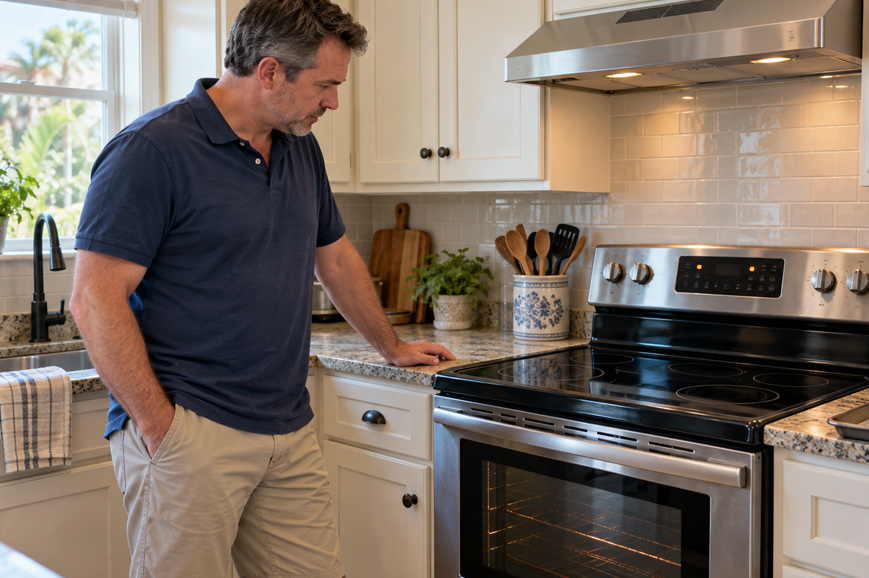
Dinner is ready to go in. The oven apparently isn’t.
You check the display, give it another few minutes, and start wondering whether you should have turned it on before you even began chopping vegetables. If that sounds familiar, the next question is whether your oven is simply slow or something has changed.
An oven taking too long to preheat may be operating normally for its design, or it may have a heating, temperature-sensing, or power-supply problem. The most useful clue is whether it takes noticeably longer than it used to under the same conditions.
For Tampa homeowners planning more baking and entertaining this fall, October is a good time to investigate. A delayed weeknight dinner is frustrating enough without discovering the same problem when guests are arriving.
How Long Should an Oven Take to Preheat?
There isn’t one correct preheating time for every oven. Its design, selected temperature, cooking mode, and starting conditions all matter.
For example, GE Appliances’ preheating guidance explains that some gas ovens and electric ovens with hidden bake elements can need 15–20 minutes. Other designs can heat faster. Those examples are not a universal limit for every brand or model.
Check your owner’s manual before assuming that a particular number of minutes means trouble. Compare similar situations, too: heating a cold oven to 450°F is different from warming one to 350°F shortly after another meal.
What deserves attention is a change. If the same oven, at the same setting, now needs substantially longer, or never finishes preheating, it is worth finding out why.
Start With These Simple Checks
You don’t need to remove panels or handle electrical parts to rule out a few everyday causes.
Confirm the Cooking Mode
Make sure you selected Bake and actually started the cycle. Delay Start, Keep Warm, and other settings can behave differently. If someone recently changed the controls or the appliance was newly installed, check the manual for any setup or demonstration-mode instructions.
Keep the Door Closed
Repeatedly opening the door releases heat. Use the oven light and window when possible. Before starting, check that a misplaced rack or oversized pan isn’t preventing the door from closing completely.
Remove Unnecessary Items
A pizza stone or heavy cookware stored inside must warm up along with the oven. With the oven cool, remove items you don’t need for the meal and arrange the racks as the manual recommends.
Also check for foil or liners covering surfaces the manufacturer says must remain clear. Whirlpool’s guide to oven baking problems explains how coverings and crowded cookware can restrict airflow and affect cooking results.
Look at the Door Seal
When the oven is cool, visually check the gasket for obvious damage and make sure the door closes normally. Don’t scrub, pull, or adjust the gasket. A damaged seal or a door that won’t close properly should be checked by a technician.
What Can Cause an Oven to Heat Slowly?
If the basic checks don’t explain the delay, several problems can produce similar symptoms.
An electric oven may have a failed heating element or a problem supplying power to the heating circuit. The clock and interior light can still work even when the oven cannot heat properly. A gas oven may have an ignition problem affecting burner operation.
A temperature sensor or control problem can also interfere with heating. That is why a working display, a glowing component, or an error code alone doesn’t identify which part needs replacing.
Give the technician the full picture: Does the oven heat at all? Does it eventually finish preheating? Does food take longer to cook afterward? Is the problem consistent or occasional?
Those details help narrow the diagnosis without guessing at parts.
Slow Preheating and Incorrect Temperature Are Different Problems
An oven can take longer to preheat and still cook properly once it is ready. It can also signal that preheating is complete while meals continue coming out undercooked or unevenly browned.
If you use an oven thermometer, follow the manufacturer’s instructions for checking temperature. Oven heat normally cycles during cooking, and a single reading immediately after the preheat signal can be misleading.
Temperature calibration may help certain ovens that consistently run a little hot or cold. It will not fix a failed heating element, an ignition fault, or a power-supply problem. Don’t keep raising the setting to compensate for an unexplained change.
When Should You Schedule Oven Repair?
Arrange service when preheating repeatedly takes much longer than usual, the oven never reaches the selected temperature, or baking performance has changed despite using the same recipes and settings.
Stop using the appliance if you notice electrical burning odors, sparks, or repeated breaker trips. If you smell gas, leave the home and contact your gas utility’s emergency line or 911 from outside. Don’t keep testing the oven.
Avoid running a self-cleaning cycle as a troubleshooting step. It won’t repair a heating problem. Our article on oven self-cleaning cycles explains what to consider before using that feature.
Get Your Oven Checked Before Holiday Cooking
October gives you time to address a problem before the oven becomes central to your holiday plans. You can also use our Thanksgiving appliance preparation guide to review the rest of your kitchen.
A DiChristopher Appliance Service provides gas and electric stove and oven repair in Tampa. Have your appliance’s brand, model number, and symptoms ready when you call.
If your oven is taking longer to preheat or no longer baking reliably, call (813) 961-1188 or request service through our contact page.
Frequently Asked Questions
Is 20 Minutes Too Long for an Oven to Preheat?
Not necessarily. Some oven designs normally require that long. Check your model’s manual and pay attention to whether its performance has changed under comparable conditions.
Why Does My Oven Turn On but Not Get Hot Enough?
A working display doesn’t confirm that the heating system is working. Heating components, ignition, controls, or the power supply may need diagnosis.
Can a Dirty Oven Cause Slow Preheating?
Cleaning is useful maintenance, but it shouldn’t be treated as the answer to every heating problem. Remove loose spills using an approved method when the oven is cool. Persistent delays need further investigation.
Will Adjusting the Temperature Fix Slow Preheating?
Calibration may correct a modest, consistent temperature offset on models that support it. It cannot repair failed components or explain an oven that has suddenly stopped reaching temperature.
Should I Replace an Oven That Heats Slowly?
Get a diagnosis first. The appliance’s condition, repair needed, parts availability, and replacement costs can help you decide whether repair makes sense.