If your dryer is running but your clothes are still damp, you are not alone. In Tampa, summer heat and humidity can make laundry problems more noticeable, especially when your dryer is already struggling with airflow, heat, or worn parts.
A dryer that takes two or three cycles to dry a normal load is not just annoying. It can waste energy, wear out clothing, strain the appliance, and in some cases, create a safety concern. For homeowners in Tampa, Brandon, Riverview, Carrollwood, Lutz, Wesley Chapel, South Tampa, and nearby communities, long dry times are often a sign that something needs attention.
DiChristopher Appliance Repair helps Tampa Bay homeowners diagnose and repair dryer issues before they turn into bigger appliance problems.
Why Tampa Humidity Can Make Dryer Problems Worse
Tampa summers are hot, humid, and hard on home appliances. When the air inside your home and laundry area holds more moisture, your dryer may have to work harder to remove moisture from clothes.
Humidity alone is not usually the main reason a dryer fails to dry. However, it can make existing problems worse. If your dryer has poor airflow, a partially clogged vent, weak heat, or a failing component, Tampa’s summer conditions can make the issue show up faster.
That is why many homeowners notice longer drying times during the hottest and most humid months of the year.
The Most Common Reason Clothes Stay Damp
The most common reason a dryer takes too long to dry is restricted airflow.
Your dryer needs steady airflow to move hot, moist air out of the drum and through the exhaust system. When airflow is blocked, moisture stays trapped inside the dryer. Your clothes may feel warm but still damp at the end of the cycle.
Common airflow problems include:
- A clogged lint screen
- A blocked dryer vent
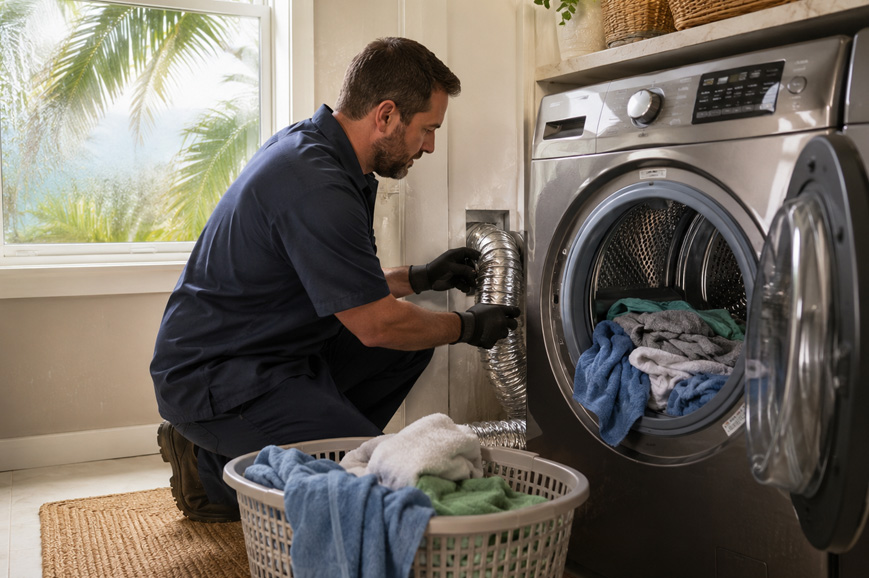
- Crushed or kinked vent hose
- Lint buildup inside the dryer
- Poor outside vent airflow
- A vent flap that does not open properly
If the dryer feels hot but clothes are not drying, airflow should be one of the first things checked.
Clogged Lint Trap vs. Clogged Dryer Vent
A clogged lint trap is easy to spot. It is the screen you clean before or after each load. If it is packed with lint, air cannot move properly through the dryer.
A clogged dryer vent can be harder to see. The vent runs from the back of the dryer to the outside of the home. Over time, lint and debris can build up inside the vent line. This can reduce drying performance and cause the dryer to overheat.
Tampa homes with longer vent runs, laundry closets, second-floor laundry rooms, or exterior vents near landscaping may be more likely to develop vent-related drying problems.
When the Problem May Be Inside the Dryer
Not every long dry time is caused by lint or airflow. Sometimes the issue is with the dryer itself.
A dryer may take too long to dry because of a faulty heating element, worn thermostat, bad thermal fuse, weak igniter, damaged sensor, motor issue, or control problem. Gas and electric dryers have different parts, so proper diagnosis matters.
If your dryer tumbles but does not heat, shuts off too early, overheats, or keeps running without drying clothes, it may be time to schedule professional dryer repair.
Warning Signs You Should Not Ignore
A dryer problem should be checked sooner rather than later if you notice:
- Clothes need more than one cycle to dry
- The dryer feels hotter than normal
- The laundry room feels humid or unusually warm
- There is a burning smell
- The dryer shuts off before the cycle ends
- Lint is collecting around the dryer
- The outside vent has weak airflow
- Clothes come out hot but still damp
These signs can point to airflow restriction, overheating, or failing dryer parts. Continuing to use the dryer may make the problem worse.
What Tampa Homeowners Can Check First
Before calling for repair, there are a few safe steps you can take.
Clean the lint screen. Check behind the dryer to make sure the vent hose is not crushed. Look outside to see if air is flowing from the exterior vent while the dryer is running. Avoid overloading the dryer, since large loads can trap moisture and slow drying.
If those steps do not solve the problem, or if you smell burning, notice overheating, or hear unusual sounds, stop using the dryer and call a repair technician.
Schedule Dryer Repair in Tampa Bay
When your dryer takes forever to dry, you should not have to keep running the same load over and over. DiChristopher Appliance Repair provides dryer repair service for homeowners throughout Tampa and surrounding areas.
Whether the issue is poor airflow, no heat, overheating, short cycling, or a part failure, a professional diagnosis can help you decide the right next step. For Tampa Bay homeowners, fast dryer repair can improve convenience, reduce wasted energy, and help extend the life of the appliance.
FAQs About Dryers Taking Too Long to Dry in Tampa
Why is my dryer taking too long to dry clothes in Tampa?
Your dryer may be taking too long because of restricted airflow, a clogged vent, heavy laundry loads, weak heat, or a failing dryer part. Tampa humidity can make these problems more noticeable because the dryer must work harder to remove moisture from clothing.
Can Tampa humidity make my dryer work harder?
Yes. Tampa’s humid air can make drying less efficient, especially if your dryer already has airflow or heating problems. Humidity is usually not the only cause, but it can increase drying time when lint buildup, blocked vents, or worn components are already present.
Is it safe to keep using a dryer that takes two cycles?
It depends on the cause. If the dryer is simply overloaded, smaller loads may help. However, if the dryer overheats, smells hot, has weak airflow, or keeps needing multiple cycles, it should be checked. Restricted airflow can strain the dryer and create safety concerns.
What is the difference between a lint trap and a dryer vent?
The lint trap is the removable screen you clean near the dryer door or top panel. The dryer vent is the duct that carries hot, moist air outside. A clean lint trap helps, but a clogged vent can still cause long drying times and overheating.
When should I call for dryer repair?
Call for dryer repair if clothes stay damp after normal cycles, the dryer has no heat, shuts off early, overheats, smells like burning, or makes unusual noises. These signs may point to airflow issues, electrical problems, sensor failure, or worn dryer components.