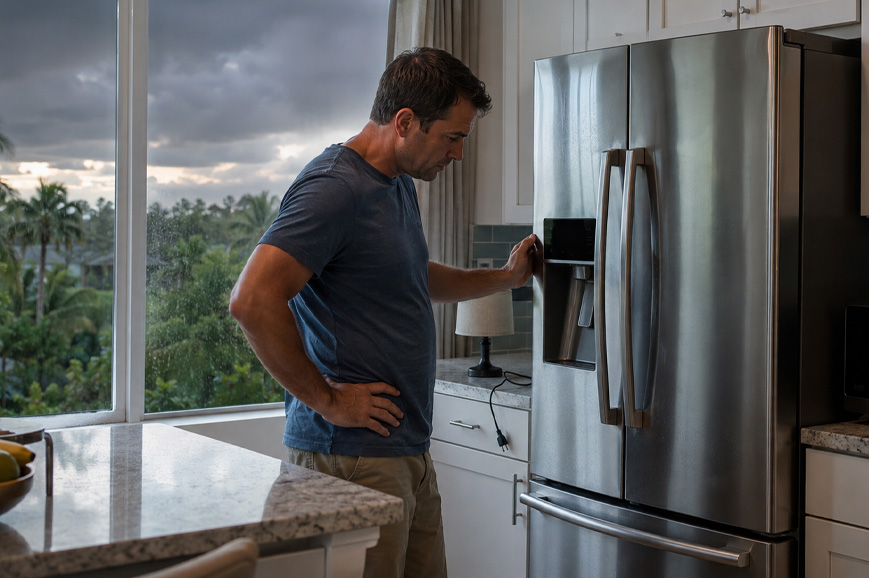
Tampa thunderstorms, lightning, tropical systems, and utility interruptions can shut off electricity without warning. When power returns, you may discover that your refrigerator is not cooling, your washer will not start, or your oven display is completely blank.
Do not assume the appliance must be replaced. A tripped breaker, safety lock, interrupted cycle, or temporary electronic error may be responsible. However, repeated resetting can make an electrical problem worse. Follow these steps to determine whether you have a simple interruption or need professional appliance repair.
Why Appliances Can Stop Working After an Outage
Modern appliances contain electronic control boards, sensors, displays, and other components that depend on stable electrical power. When electricity shuts off suddenly, an appliance may stop in the middle of a programmed cycle.
Electricity can also return with a brief voltage spike. Ready.gov recommends disconnecting appliances and electronics during an outage because these momentary surges can damage sensitive components.
Possible post-outage problems include:
- A tripped circuit breaker or GFCI outlet
- A control board that needs to reboot
- An interrupted wash or cleaning cycle
- A failed fuse, relay, capacitor, or control panel
- Damage caused by a surge or lightning strike
Start With a Safe Visual Inspection
Before resetting anything, inspect the appliance and the surrounding area. Do not touch or reconnect the unit if you notice water, scorching, melted plastic, smoke, sparks, or a burning odor.
An appliance exposed to stormwater or indoor flooding should remain disconnected. It must be inspected before use because hidden moisture can create shock and fire hazards.
If there are no visible dangers, confirm that power has returned throughout the house. Check whether nearby lights and outlets work. You can also look at the electrical panel for a breaker positioned between “on” and “off.”
Turn the breaker fully off before switching it on once. If it immediately trips again, stop. Repeatedly resetting a breaker may be unsafe and will not correct the underlying problem.
Refrigerator Not Cooling After the Power Returns
A refrigerator may need time to restart its compressor and restore the correct temperature. Keep the doors closed, confirm that the interior light or display works, and listen for the fan or compressor.
Do not repeatedly unplug and reconnect the refrigerator. Follow the manufacturer’s reset instructions, especially if the display shows an error code. If the unit has power but remains warm, makes clicking noises, or does not begin cooling, schedule professional refrigerator repair in Tampa.
Food safety is equally important. According to the FDA’s power-outage guidance, an unopened refrigerator generally keeps food cold for approximately four hours. Food that has remained above 40°F for four hours or longer may need to be discarded.
Washer, Dryer, or Dishwasher Will Not Start
Washers and dishwashers may retain water or remain locked when an outage interrupts a cycle. Select “cancel” or “drain” if the manufacturer recommends it. Avoid forcing the door open or starting another cycle while standing water remains inside.
For a dryer, confirm that both connected breakers are on because many electric dryers use a double-pole breaker. If the drum turns but the dryer no longer produces heat, the outage may have affected only part of its power supply or damaged an internal component.
Persistent error codes, drainage problems, burning odors, or blank controls should be evaluated through washer and dryer repair or dishwasher repair.
Oven or Stove Controls Are Blank
Electronic ranges and ovens may lose their clock and cooking settings during an outage. Reset the time and follow the model’s startup instructions. If the display remains blank, the control panel flashes, or the breaker trips again, do not attempt to remove electrical panels yourself.
Gas ranges also require caution. If you smell gas, leave the home and contact the gas utility or emergency services from a safe location. Otherwise, a trained technician can diagnose whether oven or stove repair is needed.
When to Call a Tampa Appliance Repair Technician
Contact A DiChristopher Appliance Repair when the appliance repeatedly trips a breaker, displays an unfamiliar error, will not cool or heat, smells burned, or remains unresponsive after one manufacturer-approved reset.
We diagnose post-outage problems for homeowners throughout Tampa and nearby communities. An inspection can determine whether the problem involves the appliance, its electronic controls, or another component—and whether repair makes financial sense.
Frequently Asked Questions
Can a power outage permanently damage an appliance?
The loss of electricity usually does not cause permanent damage by itself. Damage is more likely to occur from a voltage surge when electricity fails or returns. Control boards, displays, relays, compressors, and other electronic components can be affected.
How long should I wait before restarting an appliance?
Follow the waiting period specified in the appliance’s manual. Refrigerators and air-conditioning equipment may require several minutes before their compressors restart. Avoid quickly unplugging and reconnecting an appliance because rapid cycling can place additional strain on electrical components.
Should I reset the breaker if my appliance will not start?
You may reset a clearly tripped breaker once after checking for water, smoke, damaged wiring, or burning odors. Turn it fully off and then back on. If it trips again, leave it off and contact a qualified professional.
Why is my refrigerator running but not cooling after an outage?
The refrigerator may be completing a startup delay, or the outage may have affected a fan, relay, compressor component, sensor, or electronic control. If temperatures do not begin falling, arrange an inspection before food safety becomes a concern.
Can I use an appliance that was exposed to floodwater?
No. Do not plug in or operate an appliance that contacted floodwater. Moisture and contamination may remain inside after the exterior looks dry. Have the home’s electrical system and affected appliances inspected by qualified professionals before restoring power.