Front-load washing machines are popular because they use less water, clean clothes efficiently, and help lower energy bills. But here in Tampa and throughout the Florida Gulf Coast, many homeowners notice something frustrating: their front-load washer starts smelling musty much faster than expected.
At DiChristopher Appliance Repair, we hear this complaint all the time. Customers often tell us their washer smells like mildew, wet towels, or even standing water just months after cleaning it. In many cases, Tampa’s climate is a major reason why.
Florida’s humidity, heat, and moisture-heavy environment create the perfect conditions for mold, mildew, bacteria, and detergent buildup inside front-load washing machines. While this can happen anywhere, it tends to happen faster in Tampa than in many other states.
As a family-owned appliance repair company serving the Tampa Bay area since 1992, we’ve repaired countless washers and helped homeowners prevent recurring odor problems.
Why Front-Load Washers Develop Odors More Easily
Front-load washers are designed differently than top-load machines. They use a sealed door system and much less water during cycles. While that makes them energy efficient, it also means moisture can stay trapped inside the machine after each load.
The rubber door gasket, detergent drawer, drain filter, and drum can all hold water after washing cycles finish. Over time, that moisture mixes with soap residue, dirt, lint, and bacteria. The result is the familiar musty smell many Tampa homeowners experience.
In Florida, the problem becomes even worse because high humidity slows evaporation and prevents washers from fully drying between uses.
Tampa’s Humidity Creates the Perfect Environment for Mold and Mildew
The number one reason front-load washers smell faster in Tampa is simple: humidity.
Florida consistently ranks among the most humid states in the country. During much of the year, Tampa homes experience warm temperatures combined with heavy moisture in the air. That humidity doesn’t just affect people outdoors. It also affects appliances inside the home.
When moisture remains trapped inside a washer, mold and mildew begin growing quickly around the rubber gasket and hidden interior surfaces. In dry states, washers may air out naturally between cycles. In Tampa, the air itself often contains too much moisture for effective drying.
This is especially common in:
- Laundry rooms without ventilation
- Garages with poor airflow
- Small utility closets
- Homes near the water
- Condos with limited air circulation
Even homeowners who regularly clean their washer can still struggle with recurring odors because Florida’s climate works against them.
Many Homeowners Keep the Washer Door Closed
One of the biggest mistakes we see is homeowners closing the washer door immediately after a cycle finishes.
Front-load washers need airflow. Without ventilation, the interior stays damp for hours or even days. That trapped moisture becomes a breeding ground for bacteria and mildew. Experts consistently recommend leaving the washer door slightly open after each load to help moisture escape.
In Tampa, this habit matters even more because humidity already slows drying naturally.
We often tell customers that simply leaving the door cracked open can dramatically reduce odor problems. It sounds simple, but it is one of the most effective preventative steps you can take.
If your washer sits in a tight laundry closet, airflow becomes even more important.
Detergent and Fabric Softener Build Up Faster Than Most People Realize
Another major reason Tampa front-load washers smell bad is detergent buildup.
Modern front-load machines require HE (high-efficiency) detergent and smaller amounts than many homeowners expect. Using too much soap creates residue that sticks inside the drum, hoses, and rubber gasket.
Fabric softener can make the problem even worse. Many appliance experts and technicians warn that fabric softener leaves behind a sticky film that traps bacteria, lint, and moisture.
Over time, that buildup combines with Florida humidity and creates strong mildew odors.
Signs of detergent buildup include:
- Washer smells even after cleaning
- Clothes smell musty after washing
- Slimy residue around the gasket
- Soap buildup in detergent trays
- Gray or black spots inside the machine
At DiChristopher Appliance Repair, we frequently see odor problems caused by excessive detergent use rather than mechanical failure.
Using less detergent and avoiding unnecessary fabric softener can significantly reduce odor issues.
Tampa Homeowners Often Wash More Wet and Sweaty Clothing
Florida lifestyles also contribute to washer odor problems.
Tampa residents deal with:
- Hot temperatures
- Heavy sweating
- Beach towels
- Gym clothes
- Wet swimsuits
- Outdoor work uniforms
- Sports gear
All of these items carry moisture, bacteria, body oils, and organic material into the washer. If loads sit too long before washing or if the machine is not cleaned regularly, odors develop quickly.
Damp laundry sitting inside hampers can also introduce mildew into the washer itself. Experts note that wet clothing and trapped moisture are common sources of mold growth in laundry areas.
In Tampa’s climate, sweaty clothes and wet towels become odor-producing much faster than they would in cooler or drier regions.
That means Florida washers often need more maintenance than washers in northern states.
Most Front-Load Washers Are Never Properly Maintained
One of the biggest misconceptions about washing machines is that they clean themselves.
In reality, front-load washers require regular maintenance to stay odor free. Many homeowners do not realize they should routinely clean:
- The rubber gasket
- Drain filters
- Detergent dispensers
- Door seals
- Interior drum surfaces
Manufacturers and appliance experts commonly recommend monthly cleaning cycles to prevent odor buildup.
Unfortunately, many Tampa homeowners only clean the washer after odors already become severe.
Over time, neglected buildup can become difficult to remove without professional service. In some cases, clogged drain systems, damaged door seals, or failing components may also contribute to persistent smells.
That’s why recurring odors should not always be ignored.
When Washer Smells Could Mean a Bigger Problem
Not every washer odor is simply mildew.
Some smells may indicate:
- Drain pump problems
- Clogged filters
- Water drainage issues
- Mold hidden inside hoses
- Worn rubber seals
- Electrical issues
- Failing bearings or motors
If you notice:
- Burning smells
- Standing water
- Loud noises
- Leaks
- Mold returning quickly after cleaning
- Clothes still smelling dirty after washing
…it may be time to schedule a professional inspection.
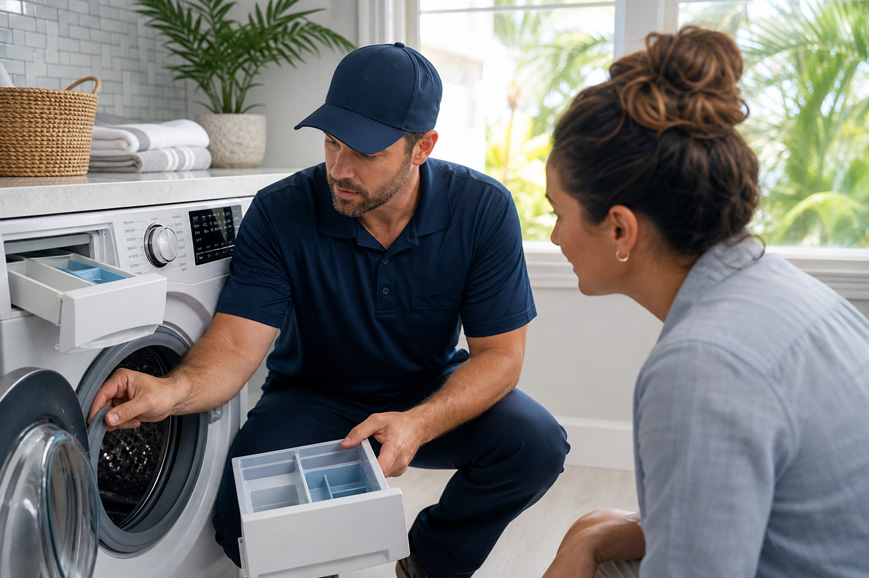
At DiChristopher Appliance Repair, our experienced technicians diagnose washer issues throughout the Tampa Bay area and help homeowners determine whether cleaning, maintenance, or repair is the best solution.
 How Tampa Homeowners Can Prevent Washer Odors
The good news is that most front-load washer smells can be prevented with consistent maintenance and a few simple habits.
Here are the most effective steps:
Leave the Door Open After Every Load
Allow airflow to dry the interior and reduce trapped moisture.
Wipe the Rubber Gasket Weekly
This removes moisture, detergent residue, and hidden debris.
Use the Correct HE Detergent
Too much detergent creates buildup and traps bacteria.
Avoid Excess Fabric Softener
Fabric softener residue contributes heavily to mildew growth.
Run Monthly Cleaning Cycles
Use washer cleaning tablets or manufacturer-approved cleaners.
Clean the Drain Filter
Many homeowners forget this important step entirely.
Remove Laundry Quickly
Leaving wet clothes inside the washer encourages odor buildup.
Improve Laundry Room Ventilation
Better airflow helps washers dry faster in humid Florida conditions.
Why Tampa Residents Trust DiChristopher Appliance Repair
At DiChristopher Appliance Repair, we understand the unique appliance challenges Florida homeowners face because we live and work here too.
Our family-owned company has served Tampa Bay for decades with honest appliance repair, experienced technicians, and dependable customer service. We believe in helping customers solve problems correctly instead of recommending unnecessary repairs.
Whether your washer has a persistent odor, drainage issue, leak, or mechanical failure, our team can help diagnose the problem and restore your appliance properly.
Final Thoughts
Front-load washers start smelling faster in Tampa for several reasons, but Florida’s humidity is the biggest factor. When trapped moisture combines with detergent buildup, poor ventilation, and heavy laundry use, mildew and odors develop quickly.
The good news is that regular maintenance and proper habits can dramatically reduce odor problems and extend the life of your washer.
If your front-load washer smells bad even after cleaning, it may be time for a professional inspection. Catching problems early can help prevent more expensive repairs later.
For trusted washer repair and appliance service in Tampa Bay, DiChristopher Appliance Repair is here to help.